
Never say never
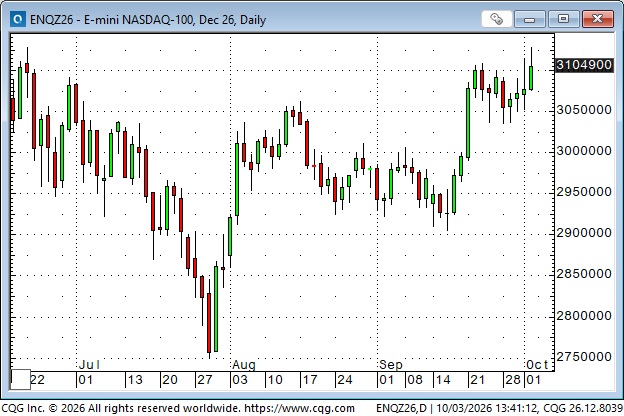
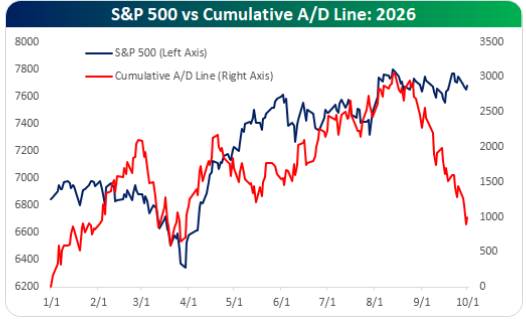
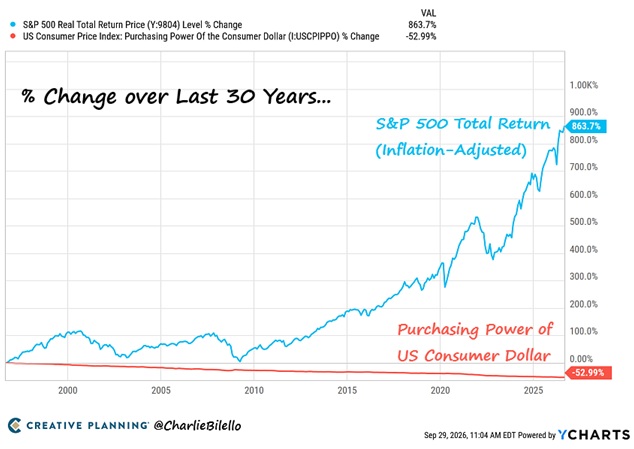
Nasdaq futures spiked to new all-time highs after “softer than expected” NFP data on Friday morning, but the Big Story in stocks is that the S&P index is at/near record highs while so many individual stocks/sectors are down significantly from their highs.
Everybody knows that the dice are loaded, with concentration in the S&P at historic highs (The top 10 stocks = ~40% of the index’s market cap, the top 24 = ~50%, and the remaining 476 stocks = the other ~50%). Big-cap stocks, especially tech, are in a class by themselves, with extraordinary earnings growth and expectations that will continue.
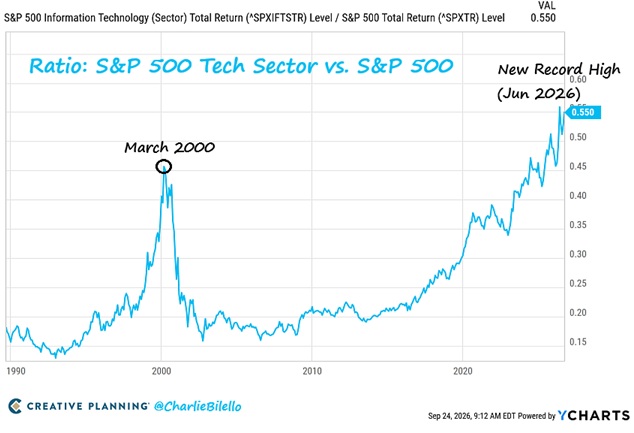
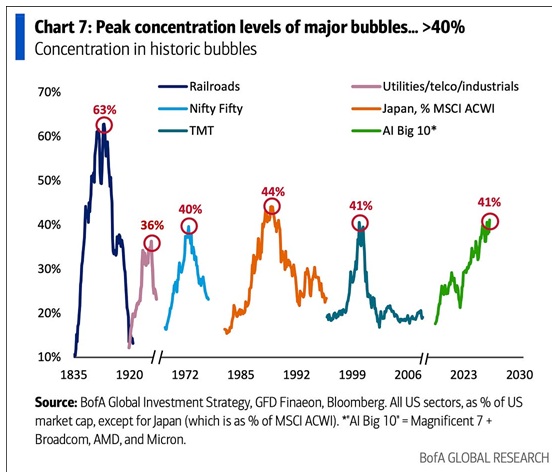
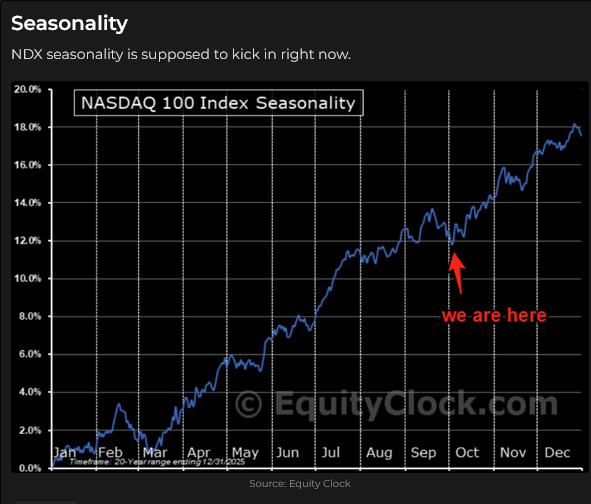
Never say the stock market can’t go higher.
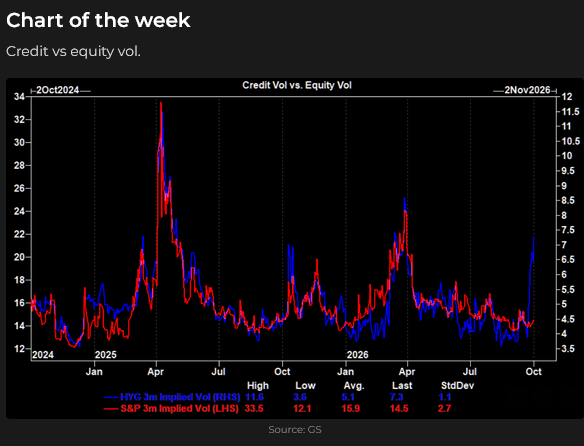
Bond option VOL (blue line) may be showing signs of stress, but stock index VOL (red line) is just drifting along.
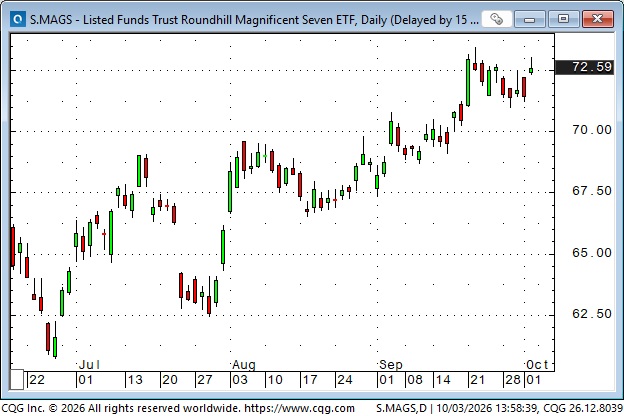
The Magnificent Seven big-cap tech ETF has rallied ~10% from its mid-August lows…
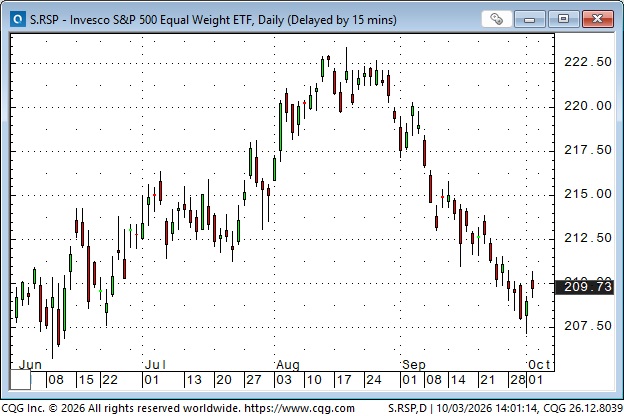
While the equal-weight S&P has fallen ~7% from its mid-August highs.
Interest rates
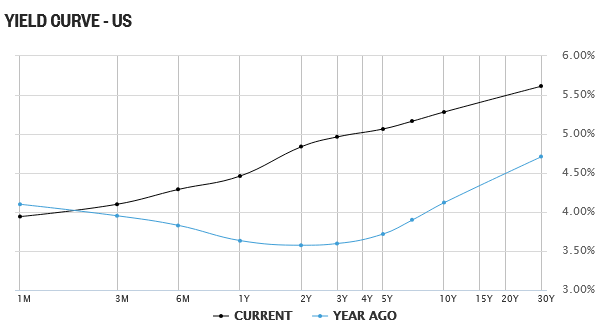
Bond yields surged higher again this week, with the 30-year yield reaching ~5.6%, the highest since 2004. Since the start of the war with Iran, the 30-year yield is up a full 1%.
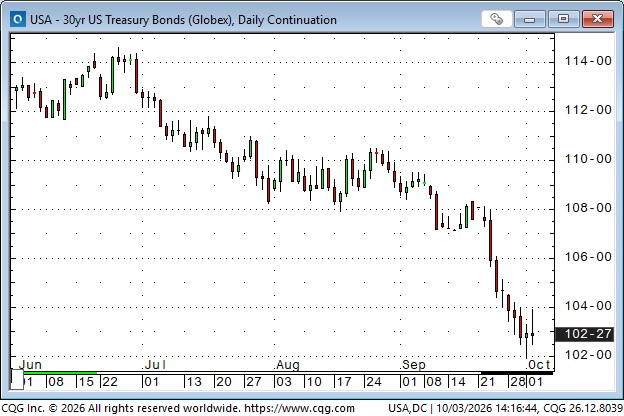
Bond yields have been trending higher (prices lower) since hitting historic lows in 2020 during covid.
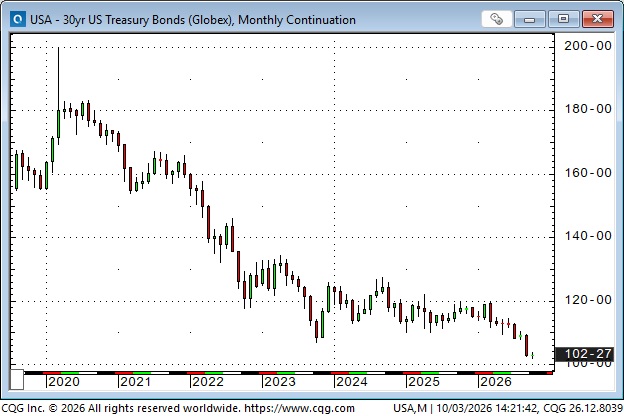
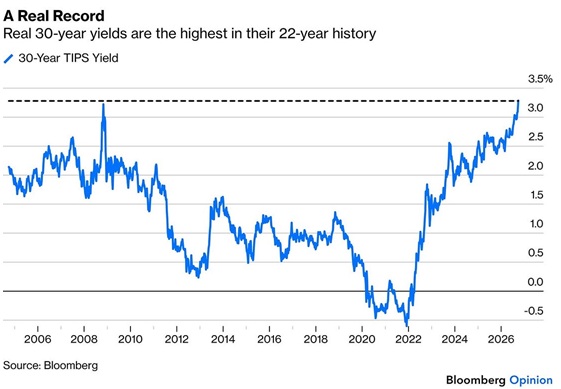
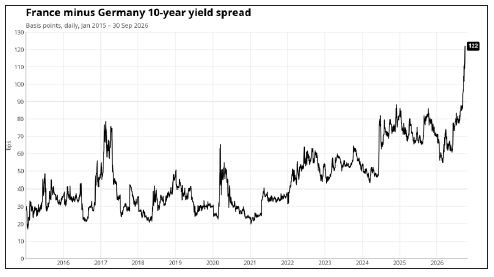
Bond yields are rising because: 1) Oversupply, as governments continue deficit spending they have to borrow more money, and corporates (especially in the US) are issuing a lot more bonds; 2) stronger economic growth (especially in the US) increases borrowing demand and costs; 3) credit-quality spreads are widening (for instance, French yields rising Vs. German yields); 4) expectations that central banks will keep raising short rates to “fight” rising inflation (especially from rising energy costs); 5) weakening demand, as bond buyers demand “more” to take on the risk of owning longer-dated debt.
Rising bond yields are tightening financial conditions, which may mean that central banks will need to raise short rates less than they otherwise would.
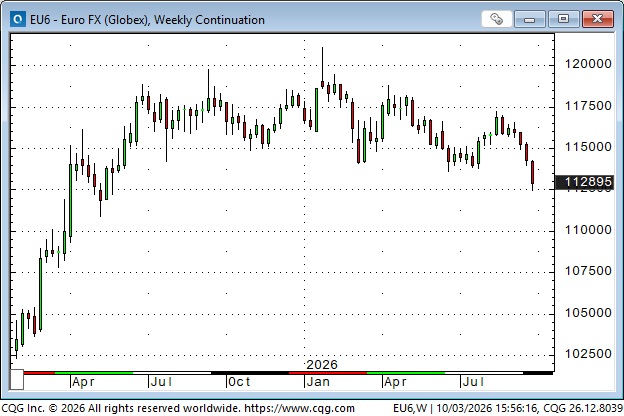
Yields in France have risen faster than German yields (which has pressured the Euro Vs. the USD to its most oversold in 9 years).
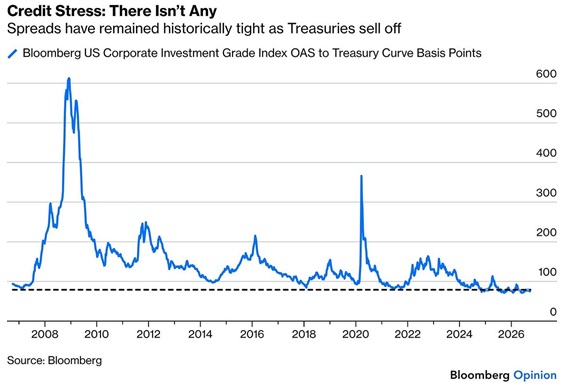
But in the USA, there are few signs of credit stress.
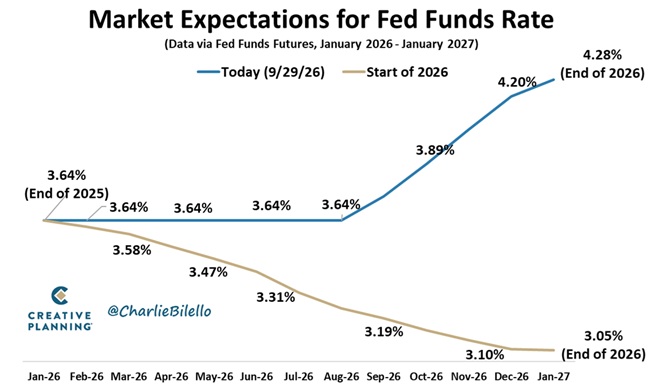
Market expectations for the Fed funds rate have changed dramatically since the start of the year.
Buy Humiliation
Bank of America’s Mike Hartnett published another “Buy Humiliation” report this week, recommending a bond buy.
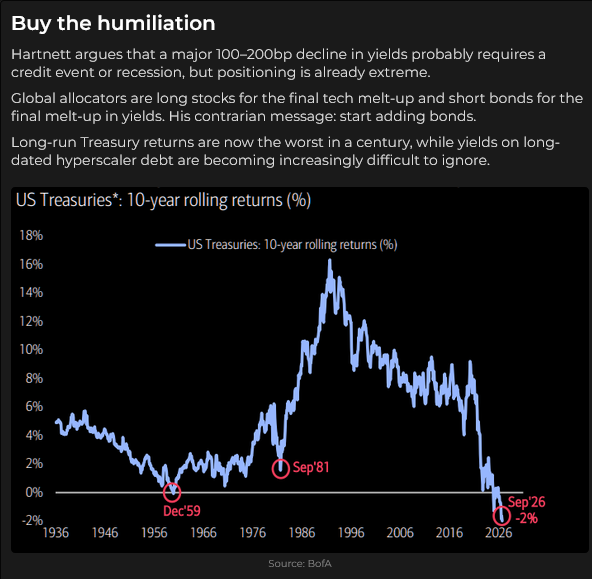
Sunday edit: for a LOT more on Hartnett’s thinking, here’s a link to a ZeroHedge review of his latest research piece.
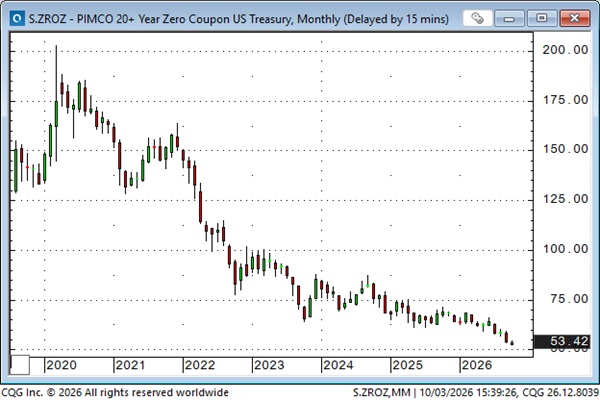
The Heisenberg Report covered Mike’s recommendation and offered this Zero-coupon suggestion for traders who are looking for a little “zip” if bonds rally. (NOT investment advice!)
Changing intermarket relationships
Sharply rising interest rates seem to have no impact on the S&P (well, maybe rising rates are affecting the “laggards” in the S&P, but not the two dozen big-cap stocks driving the indices higher).
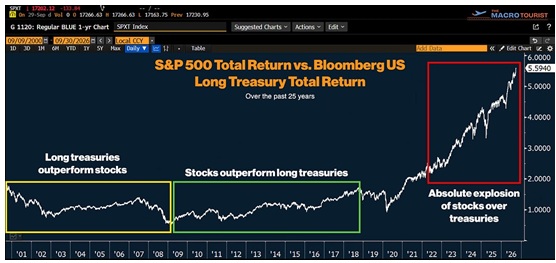
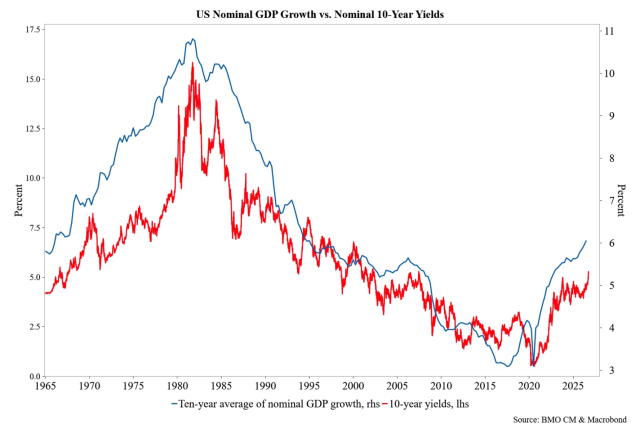
Old-school thinking would expect sharply higher rates to be a drag on the economy, earnings, and share prices. But maybe the “cause and effect” is the other way round; maybe a surging economy, higher earnings and share prices are causing interest rates to rise.
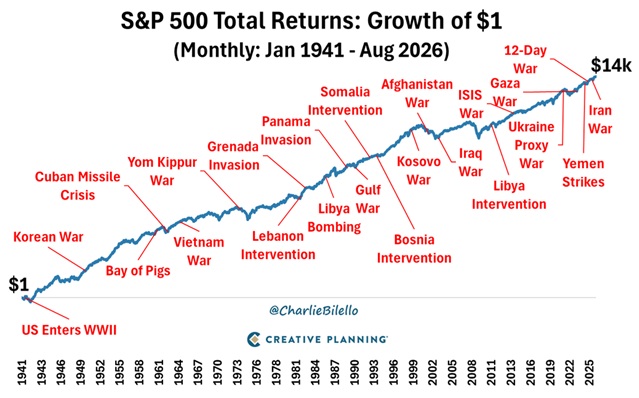
Old-school thinking might also expect the US stock market to fall if the US got into a shooting war that sharply increased energy prices. Well, the S&P fell for five consecutive weeks from near-record highs when the war with Iran began (blue ellipse), but three weeks later it was trading at new record highs, and has gone higher virtually ever since!
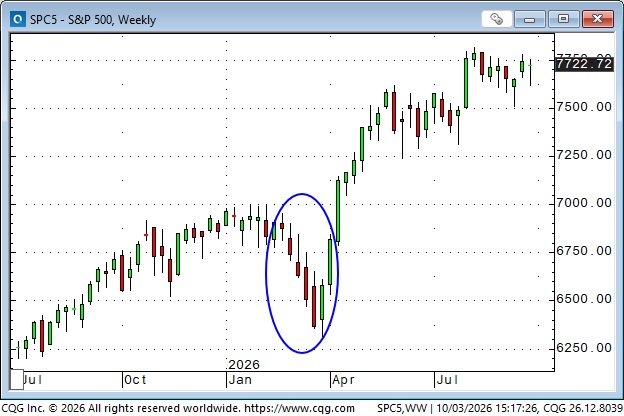
Shooting wars don’t seem to have had much impact on the S&P’s rally.
Currencies
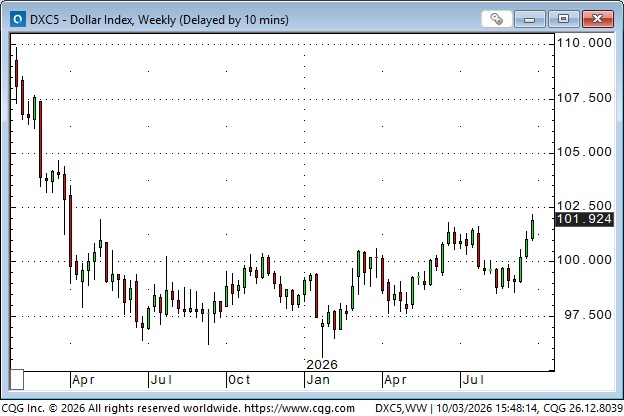
The DXY US Dollar Index broke out to an 18-month high this week, with some technical indicators calling it the most “overbought” in years.
The Euro fell to an 18-month low, with French bond yields soaring against German bond yields, and as Europe’s “energy issues” and other problems become increasingly fraught.
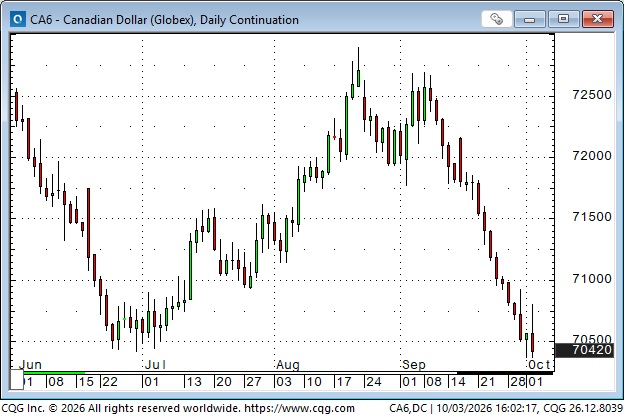
The Canadian Dollar is also at 18-month lows, following a relentless 235-point (3.25%) decline over the last four weeks. The US short-term interest rate premium over Canada reached ~170 bps this week before returning to ~160 on Friday following the softer NFP report.
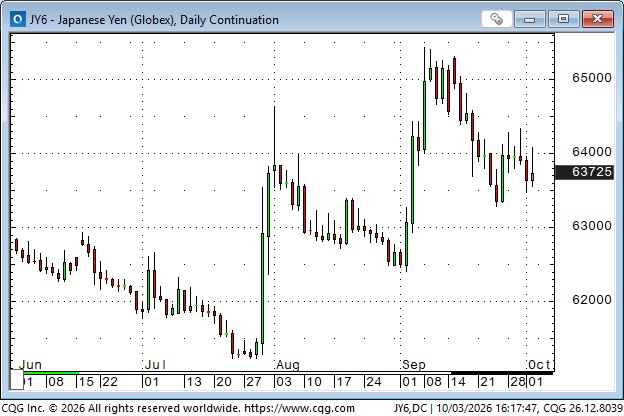
The Japanese Yen is down ~2.5% from its month-ago highs against the USD, but is up ~5% from the 35-year lows it reached in July before aggressive intervention gave it a boost.
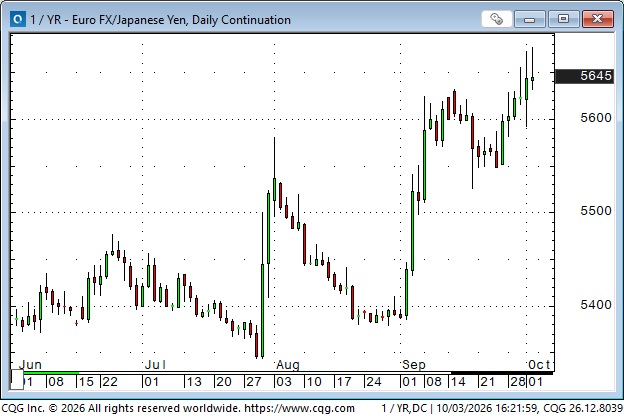
The Yen has rallied ~5.5% against the Euro from its record lows reached this past summer.
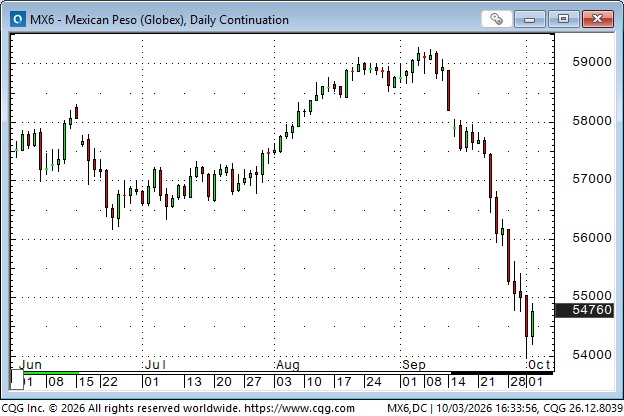
The Mexican Peso tumbled nearly 9% against the USD from 28-month highs in early September to this week’s 10-month lows. I think the sharp fall in the MXN was largely a carry unwind (not concern about Mexico being hit with a US diesel export ban), as the Yen soared on intervention and the USD also rallied in September. The Mexican Peso fell over 10% in the 2nd half of 2024 as traders unwound carry trades after Japanese authorities intervened to rally the Yen. I wrote about Yen carry trades several times in 2024.
Energy
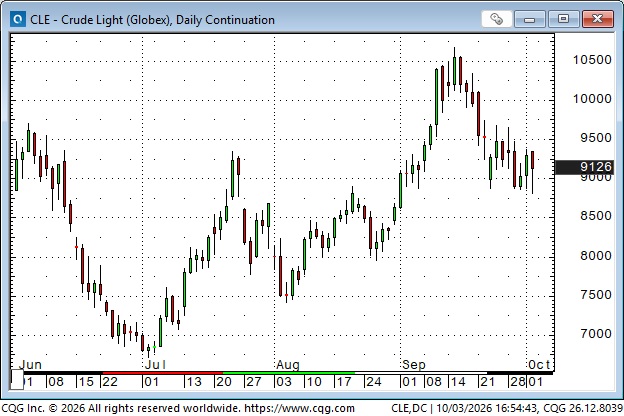
Front-month WTI rallied to 4-month highs of ~$105 in mid-September, but has fallen back to ~$90 recently as it appears Middle Eastern total crude exports have returned to just below prewar levels – without a “deal” to end hostilities. The $25-30 premium above prewar levels may represent a “risk premium.” Weekend reports of attacks on KSA refineries and Trump’s comments about renewed attacks on Iran may weigh on prices next week.
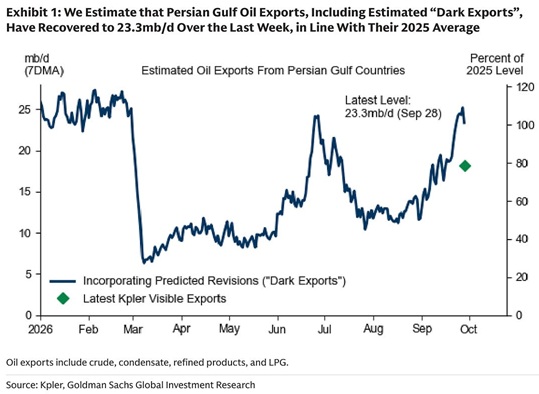
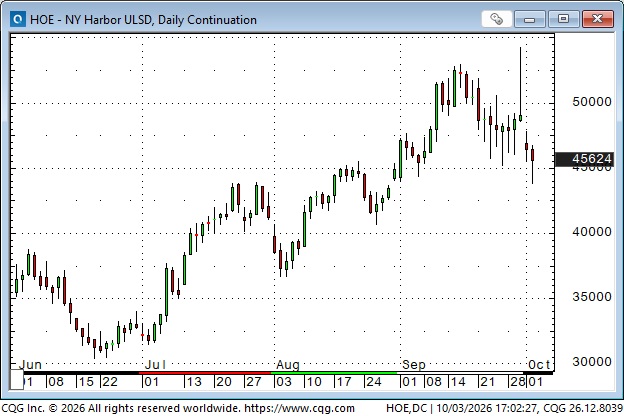
Front-month ULSD futures reached record highs in September and have since dropped about 15%. Apparently, product exports from the Middle East are running at only ~50% of prewar levels, while Russia has extended their diesel export ban to the end of October and Chinese refineries are also limiting diesel exports. American restrictions on diesel exports may be less likely now that European countries have agreed to put some of their substantial reserves on the market.
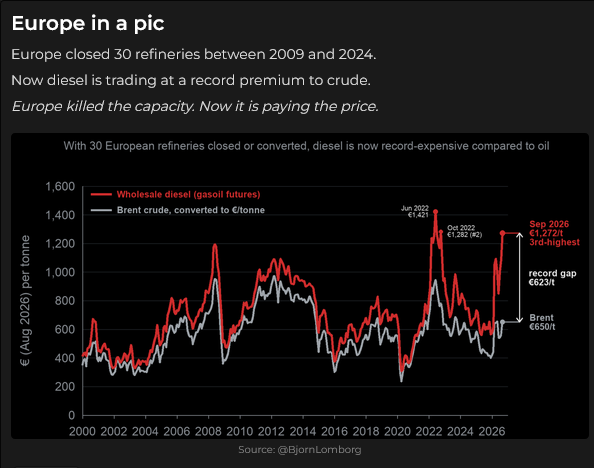
Pan-European natural gas storage is currently well below previous levels for this time of year, and markets expect European buyers may need to raise bids to attract LNG cargoes to meet winter demand.
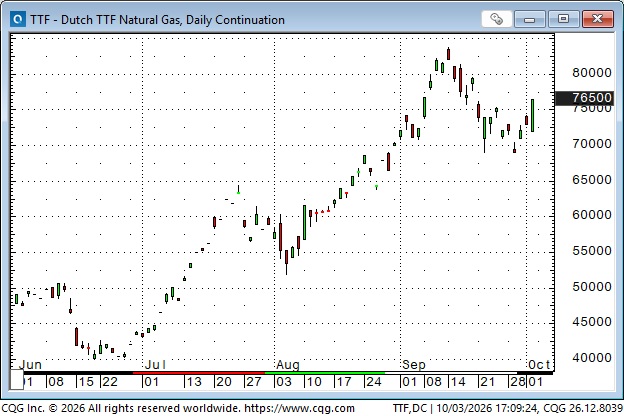
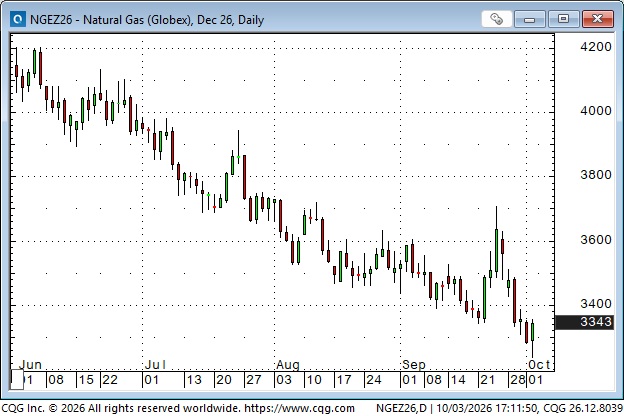
European prices remain far above North American prices, with NYMEX winter delivery contracts continuing to decline.
Sunday edit: For readers who want to do a deep dive into the energy markets, I recommend Riko Kardamow on Substack. I’m a paid subscriber, but he provides a TONNE of info for free.
Gold
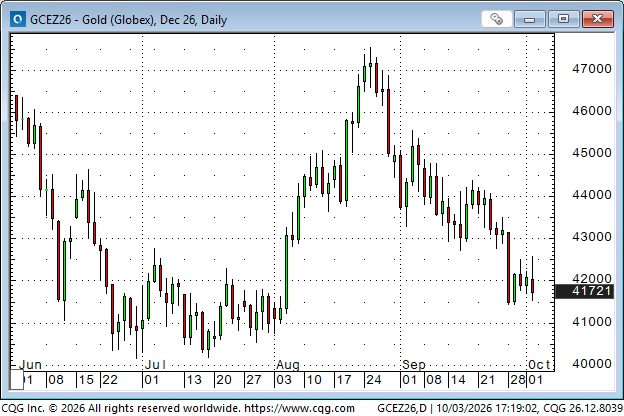
Gold rallied ~$600 in August, but has given that back over the last 6 weeks as rising interest rates and a rising US Dollar once again create a toxic environment for gold.
My short-term trading
I shorted the S&P twice this early week and covered for slight losses. I reshorted the S&P on Friday, near the highs (a much better location than the previous shorts) and held that trade into the weekend.
I bought OTM bond calls on Tuesday as a limited-risk way of picking a bottom in the falling bond market. I held the trade into the NFP report on Friday, saw the options return to my buy price, but when the market couldn’t sustain the rally, I covered for a very slight loss.
I also bought the CAD on Tuesday and never saw daylight on the trade. I was stopped for another slight loss on Wednesday overnight.
Barney – patiently waiting for Papa to finish writing this week’s Trading Desk Notes

Listen to Mike Campbell and me discuss markets
On this week’s Moneytalks show, Mike and I discussed surging bond yields, the dispersion in the equity markets (big tech up, other stocks down), and my theory that bond yields are up (in part) because the US economy is booming. You can listen to the entire show here. My spot with Mike starts around the 56-minute mark.
Listen to Jim Goddard and me discuss markets
I did my regular monthly 30-minute interview with Jim on the “This Week In Money” podcast on Friday. We discussed surging interest rates, the bifurcated stock market, the Canadian dollar, gold, energy issues and how I’ve been trading markets lately. You can listen to the entire show here. My spot with Jim starts around the 11-minute mark, following Jim’s interview with my long-time friend, Ross Clark. Another long-time friend, John Mauldin, joined Jim for a great interview after mine.

The Archive
Readers can access any of the weekly Trading Desk Notes from the past six years by clicking here.
Subscribe: You have free access to everything on this site. Subscribers receive an email alert when I post new content, typically four to six times a month.
Victor Adair retired from the Canadian brokerage business in 2020 after 44 years and is no longer licensed to provide investment advice. Nothing on this website is investment advice for anyone about anything.