
Is AI Too Big To Fail?
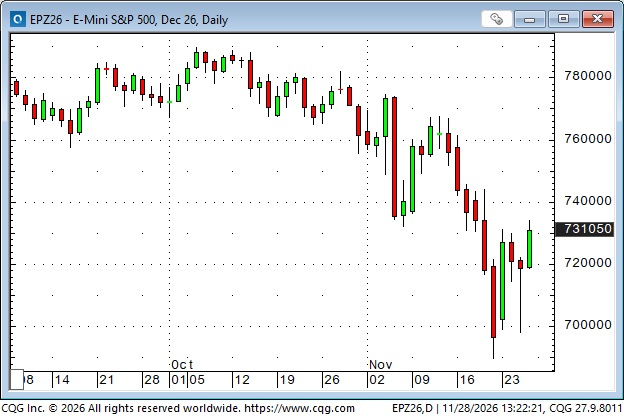
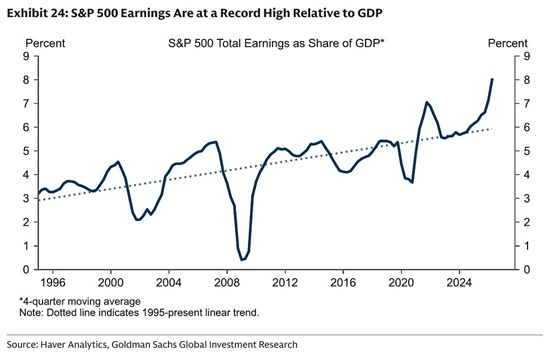
The S&P fell ~12% from its early October record highs to last week’s lows. The Nasdaq fell ~21%.
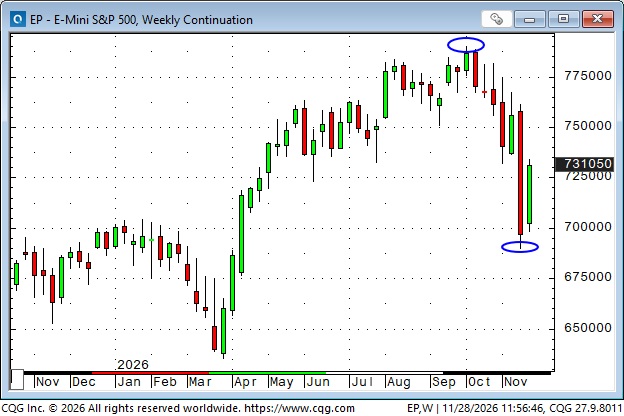
Powering the dive was NVDA, which dropped nearly 50% over the same period and accounted for ~35% of the S&P’s lost market cap.
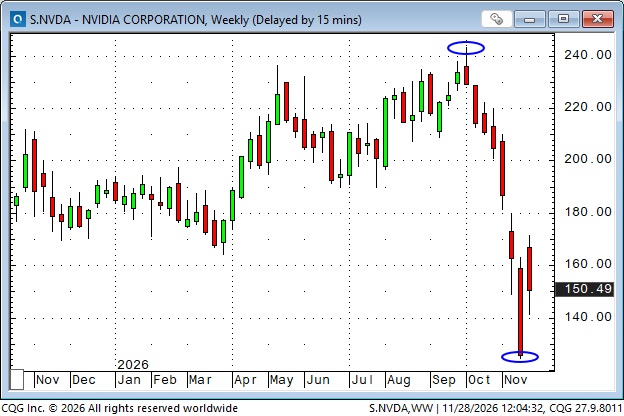
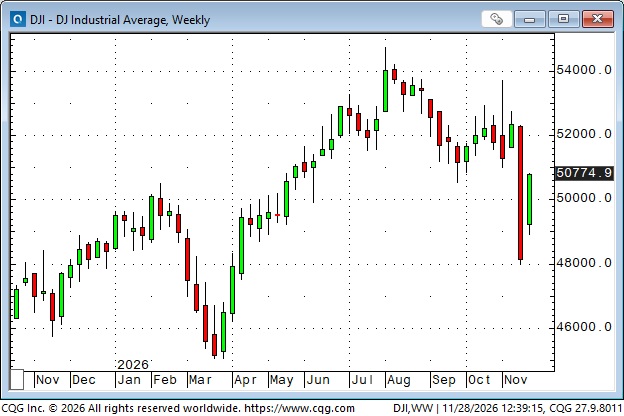
Jensen Huang had resigned the previous week, but despite NVDA’s stellar Q report on November 17, NVDA shares closed last week on the lows, as did the S&P, the Nasdaq, the DJIA, and several other leading global stock market indices.
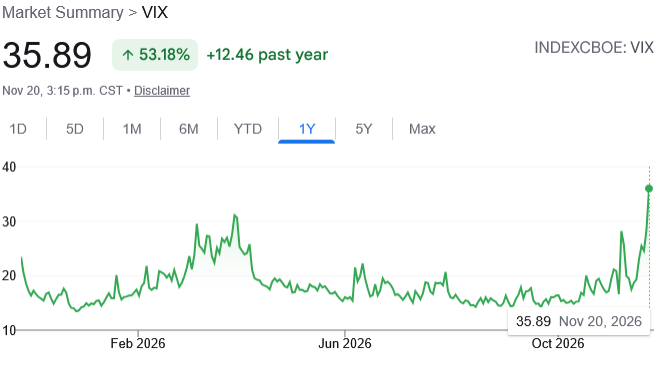
The VIX had soared to ~36%, its highest since the Liberation Day debacle.
In last week’s Notes, I wrote, “The S&P closed 4 standard deviations below its 50-day moving average on Friday, the lowest in 11 years.”
Somebody, somewhere, decided that something had to be done.
Trump called the NVDA board and told them to reinstate Jensen. They did. The indices opened higher Sunday evening, climbed overnight, and exploded higher Monday morning once the news of Trump’s call was made public before the exchanges opened.
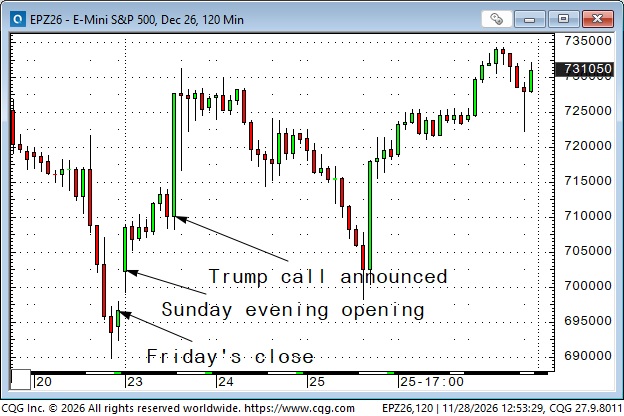
The rally flatlined within a couple of hours of the news that Jensen had been reinstated, and prices drifted lower throughout Tuesday’s session, fell to new lows for the week in the overnight market, then spiked higher again on Wednesday ahead of Thursday’s Thanksgiving closure. The S&P rallied in a typically quiet, low-volume post-holiday session on Friday, closing the week ~5% above last week’s close.
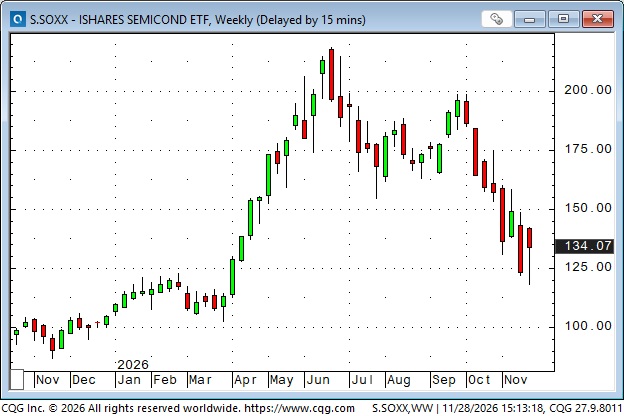
The semiconductor ETF, SOXX, was down ~46% from June’s record highs at this week’s lows.
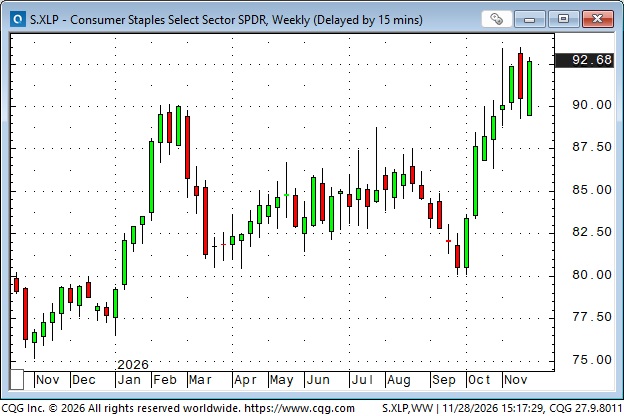
The consumer staples ETF, XLP, has rallied ~15% since the beginning of October, while the tech sector has been falling. Rotation.
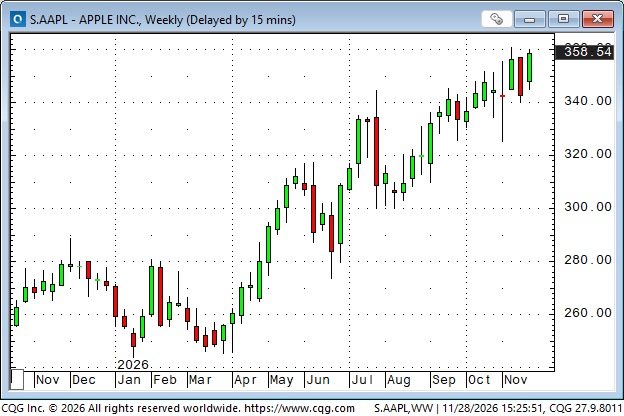
AAPL continues to act as a “refuge” for capital in the tech sector, closing this week at a new record high.
Metals
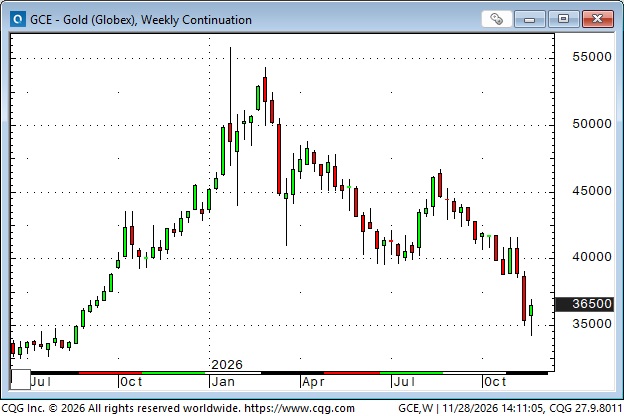
Comex gold futures fell to a 15-month low last week, down over $2,000 (~36%) from January’s record highs, seemingly in sympathy with last week’s plunge in equity markets.
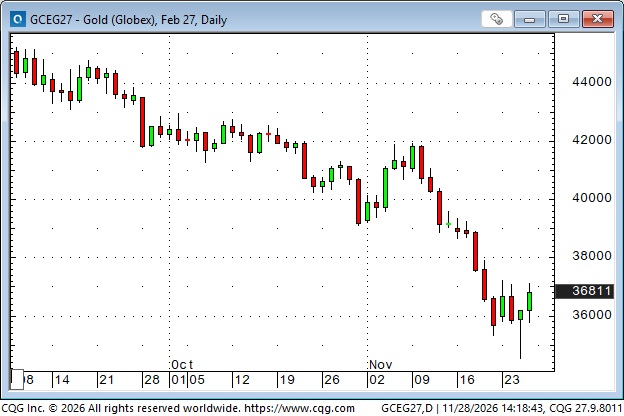
This week, gold rallied on Monday as markets seemed to “breathe a sigh of relief” on the Jensen reinstatement, but fell back on Tuesday and Wednesday (making new lows on Wednesday) before rallying back to close Friday above last Friday’s close, just like the S&P.
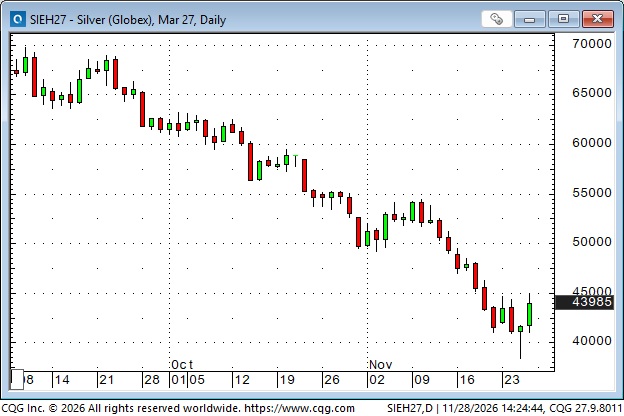
Silver traded with a $34 handle on Wednesday, the lowest it’s been since June 2025, but bounced back big-time to close this week nearly $10 off the lows.
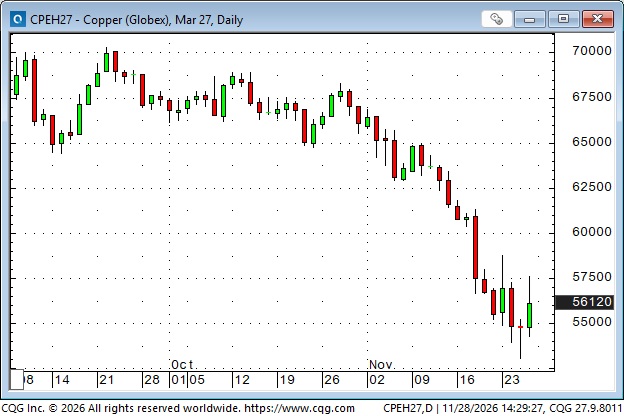
Copper also had a similar pattern to the S&P this week, bouncing back on Monday after a steep decline last week, rolling over on Tuesday, making new lows on Wednesday, and then rallying back on Friday to close above last Friday’s close.
Currencies
The DXY US Dollar Index closed at a 20-month high last week and surged to a new high (blue ellipse) on Monday on the news of Jensen’s reinstatement. The market fell back on Tuesday and drifted sideways for the balance of the week, closing slightly higher than last week’s close.
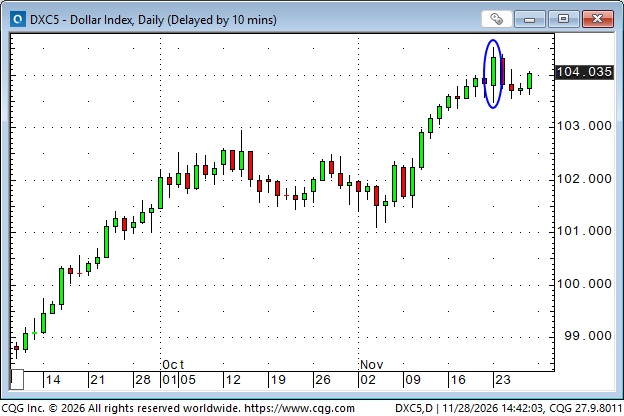
The USD has benefited from premium interest rate differentials and expectations of higher rates to come as the FOMC moves to counter persistently higher-than-target inflation. But I think “American exceptionalism,” which includes unique opportunities in equities, a strong economy (Q3 GDP at 4.3%), and energy self-sufficiency, has acted as a magnet for a tsunami of foreign capital (Deutsche Bank estimates $1.5 trillion inflow over the past 18 months, with the majority of that flow going into equities, not bonds), boosting the USD. The 64-thousand-dollar question in the FX market, however, is, “What happens to the USD if the US stock market rolls over? Will foreign investors repatriate capital?
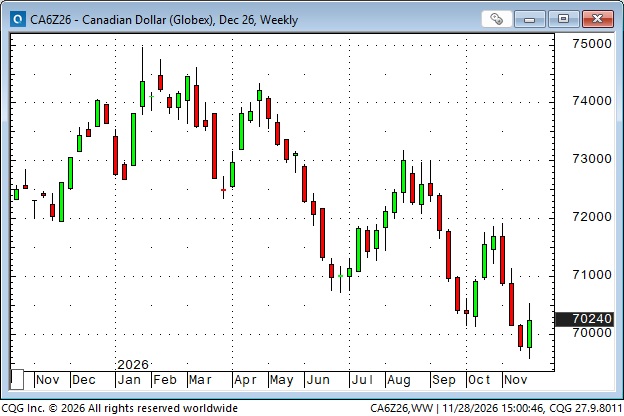
The Canadian Dollar traded below 70 cents early this week (a new 20-month low), but bounced back later in the week, setting up a key weekly reversal on the charts. The BoC is expected to raise rates 25 bps at the December 9 meeting (the same day the Fed is expected to announce a 25 bps hike).
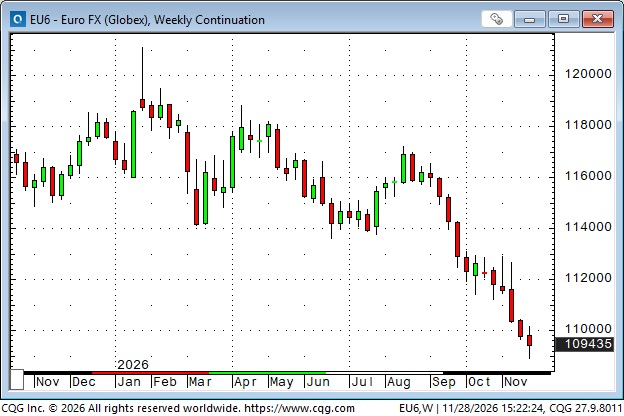
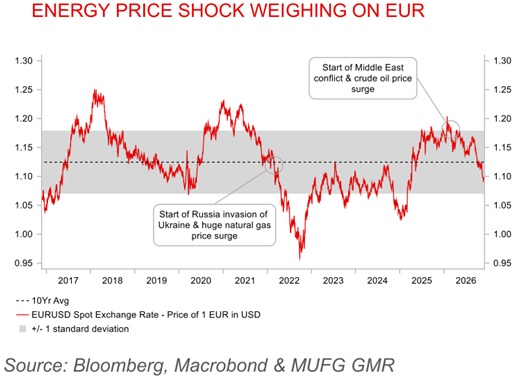
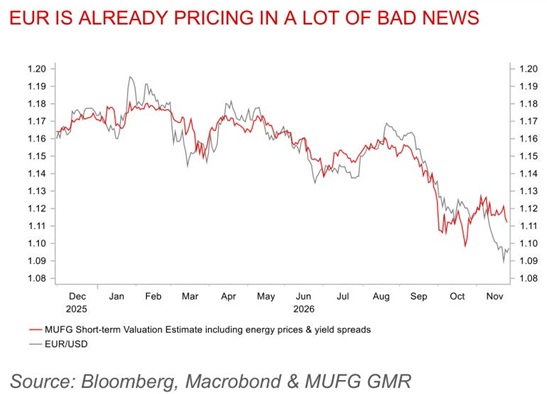
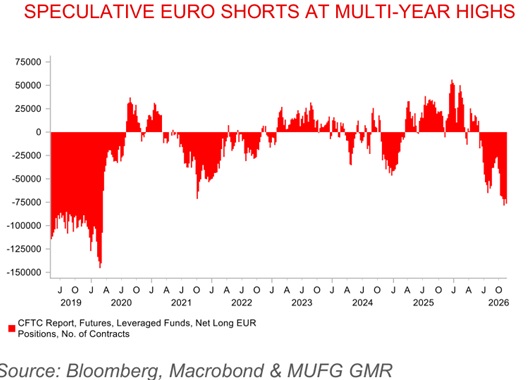
The Euro has closed lower for 11 of the past 12 weeks, falling to 20-month lows against the USD. Is the Euro overdue for a bounce?
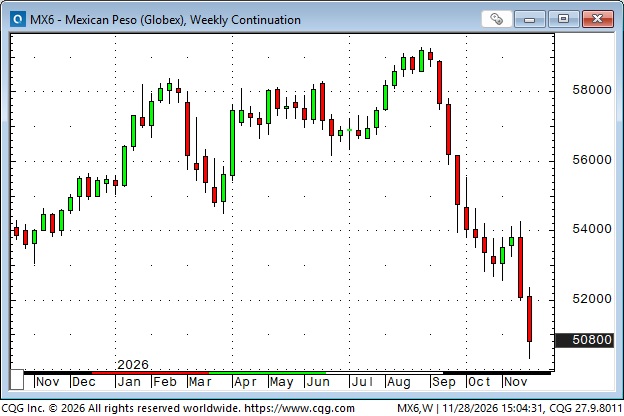
The Mexican Peso has traded like an emerging-market currency over the past couple of months, down ~15% since early September to a 19-month low.
Interest rates
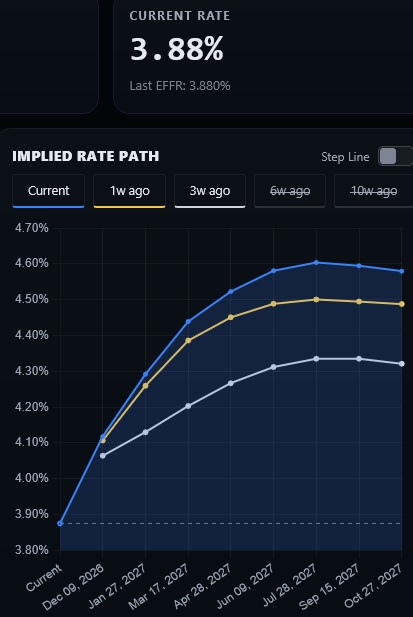
Markets are expecting the FOMC to raise short rates by 25 bps at the December 9 meeting, with rates in June 2027 expected to be ~70 bps higher than current levels.
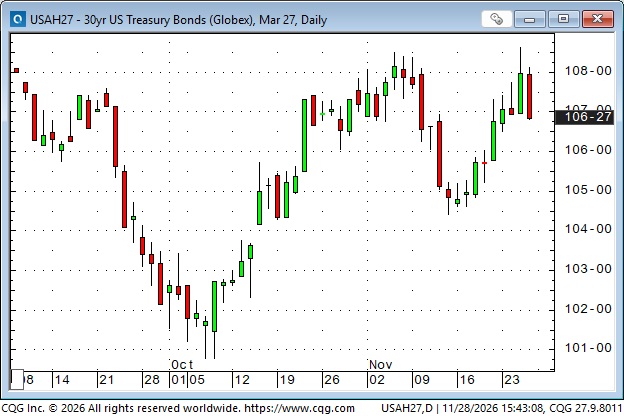
Bond futures were at twenty-something-year lows in early October (when the S&P and Nasdaq were at record highs), and they have maintained a pretty good negative correlation with the stock indices since then. I think the bond market “likes” the prospect of higher STIR to either get inflation down and/or cool the economy.
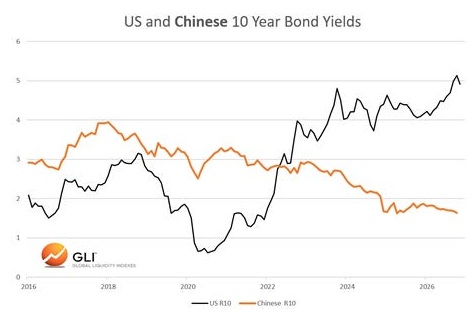
China is still struggling with a balance sheet recession.
Energy
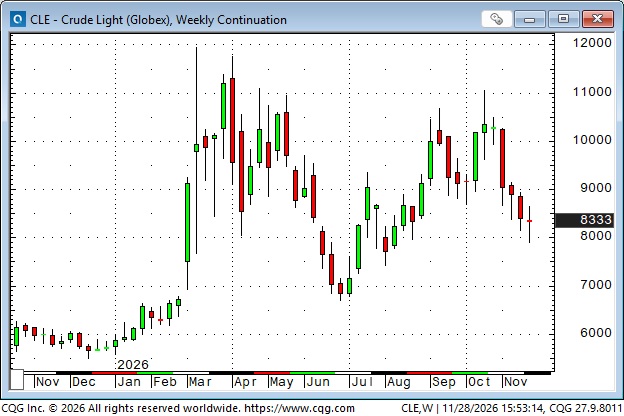
Front-month NYMEX WTI futures traded ~$30 below 6-week-ago levels this week, despite Iranian attacks on Hormuz shipping, Houthis hitting the KSA, and Ukrainian drones attacking several Russian refineries.
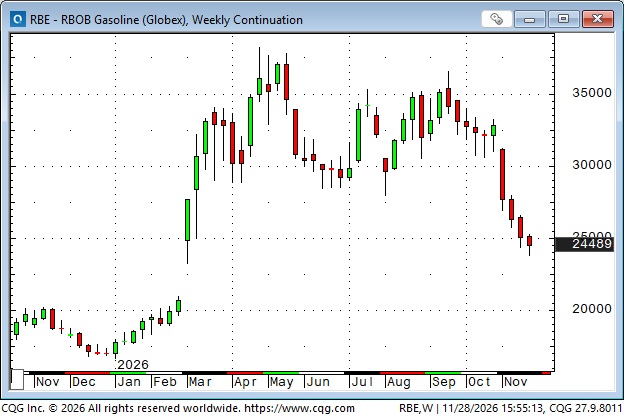
Front-month NYMEX gasoline futures have dropped to the lowest prices since the beginning of the war with Iran.
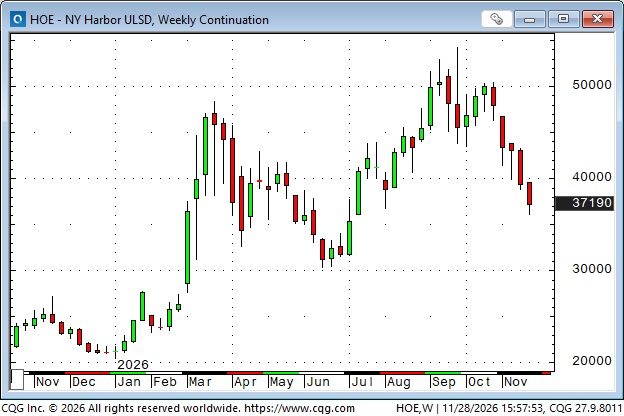
Front-month NYMEX heating oil prices are ~30% below their late September record highs.
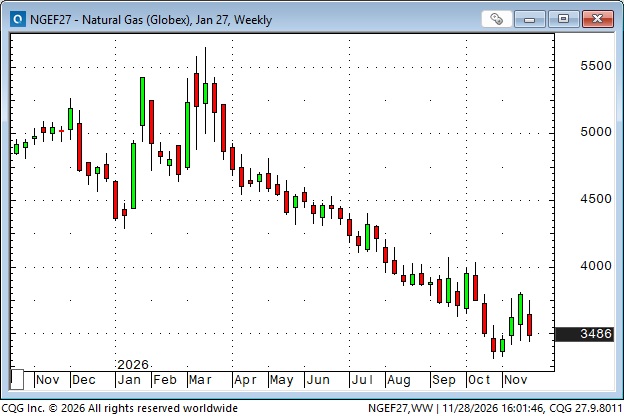
January delivery NYMEX natural gas rallied over the previous 3 weeks, but seemed to resume its relentless 9-month decline this week.
My short-term trading
I started this week long TNotes (bought last Wednesday) and covered that trade on Wednesday for a good gain of >1.5 points.
I bought the Euro on Wednesday, thinking it was poised for a breakout rally, but I was stopped on Friday for a slight loss.
I did not trade the stock indices this week. I frequently day trade the S&P if I can find a low-risk entry point. I didn’t see any this week!
My P&L had a good net gain this week, and I was flat into the weekend.
The Barney report
We’ve been hit with the seasonal “Atmospheric Rivers” here in the Pacific Northwest RainForest, but Barney doesn’t mind. Well, he doesn’t like having to wear his raincoat, but he puts up with it if it means he gets to go outside. Here’s the wet dog, during a brief break in the rain, chewing on his latest favourite stick.

Moneytalks
I hosted the Moneytalks show this week, starting with my feature guest Kevin Muir, The Macrotourist. You can listen to the entire podcast here. In addition to Kevin, I had regular guests Ozzy Jurock and Rob Levy, as well as a couple of excellent brief spots by the show’s producer, Grant Longhurst. The interview with Kevin is also available as a video on YouTube at:
I will host the Moneytalks podcast again next week while Mike Campbell, the regular host, takes a well-deserved vacation, and my featured guest will be Brent Donnelly.
I did my monthly 30-minute interview with Jim Goddard, the host of This Week in Money, on Friday. You can listen to the interview here.
The 38th Annual World Outlook Financial Conference
Mike and his team will host another great conference at the Bayshore Hotel in Vancouver on February 5 and 6, 2027. I will be the opening speaker on Friday afternoon and will help Mike with MC duties on Saturday. I look forward to meeting many of my subscribers at the conference. Please don’t be shy to say hello. If you are planning to attend, buy your tickets now. The Early Bird prices expire in a couple of days.
The conference has a terrific lineup of speakers and presenters; click here to access all the information you need and to register to attend.

The Archive
Readers can access any of the weekly Trading Desk Notes from the past six years by clicking here.
Subscribe: You have free access to everything on this site. Subscribers receive an email alert when I post new content, typically four to six times a month.
Victor Adair retired from the Canadian brokerage business in 2020 after 44 years and is no longer licensed to provide investment advice. Nothing on this website is investment advice for anyone about anything.